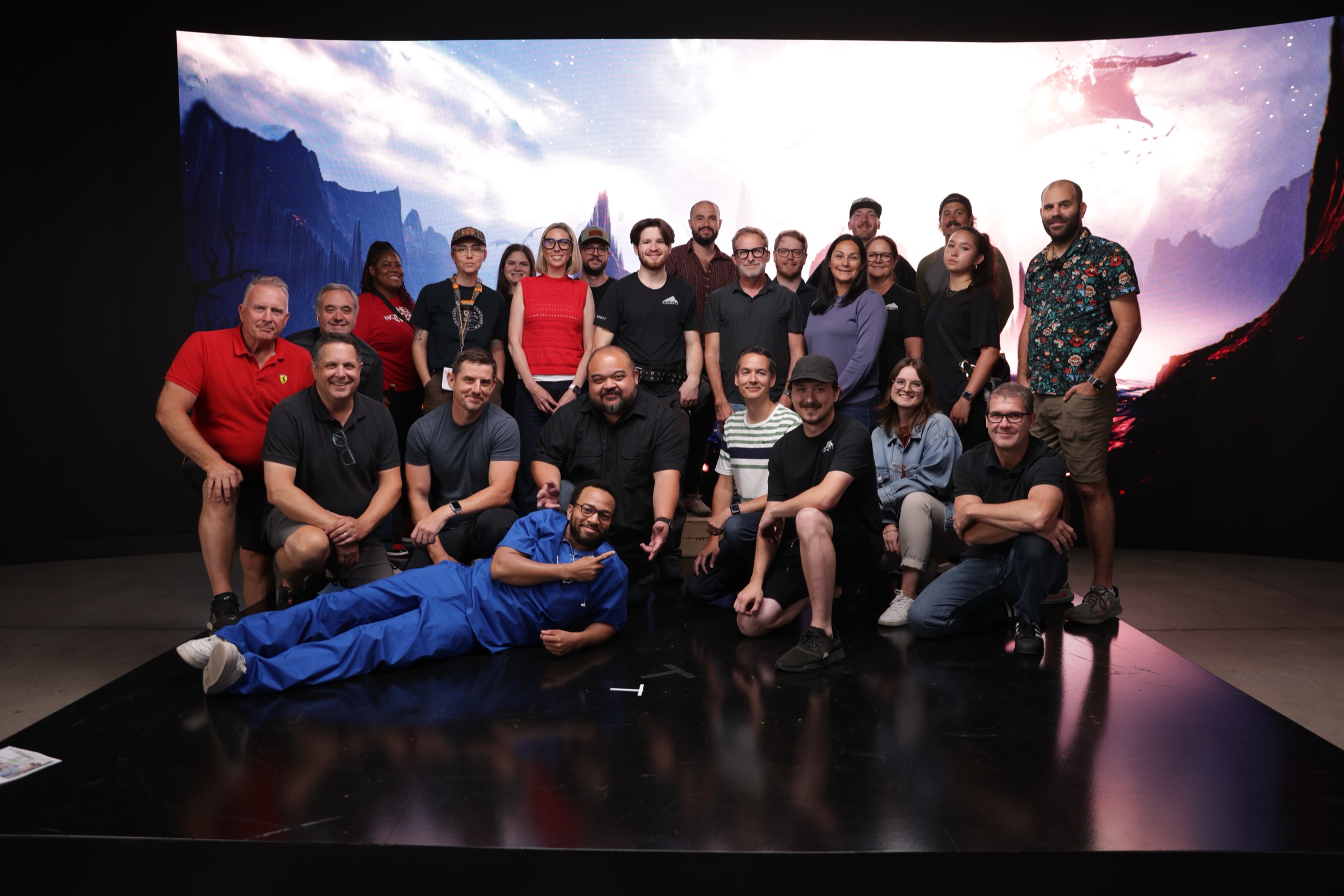
LED Video Wall Production for Qualcomm XR
Technology / LED Video Wall
Completed August 2025
Element 7 partnered with global agency VML to produce video and photo assets for Qualcomm’s entire XR product line — MR headsets, VR headsets, AR glasses, and AI glasses — using LED volume technology at a fraction of the time and cost of traditional production.
The Brief
When VML needed a production partner to capture visual assets for Qualcomm’s Snapdragon-powered XR lineup, the challenge wasn’t just “make it look good.” It was: shoot 25 scenes across multiple product categories, with real-time background environments, in two days — and deliver assets that would become the visual backbone of Qualcomm’s XR web presence.
The deliverables included product sizzle reels, website banner hero videos, feature highlight videos, and stills — all destined for Qualcomm’s website, where the vast majority of visual assets you see today are what we captured and produced on this shoot.
That’s a lot of ground to cover. Here’s how we did it.
Why LED Volume Instead of Green Screen
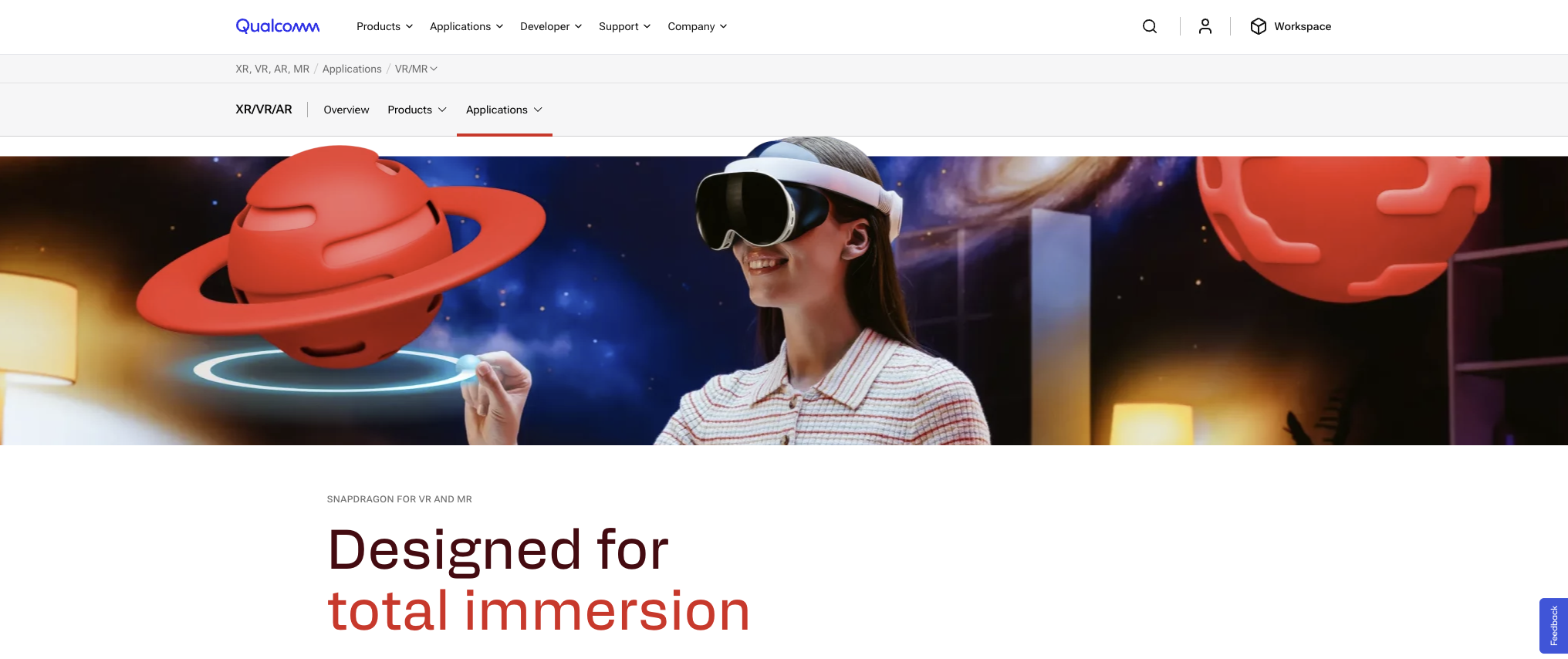
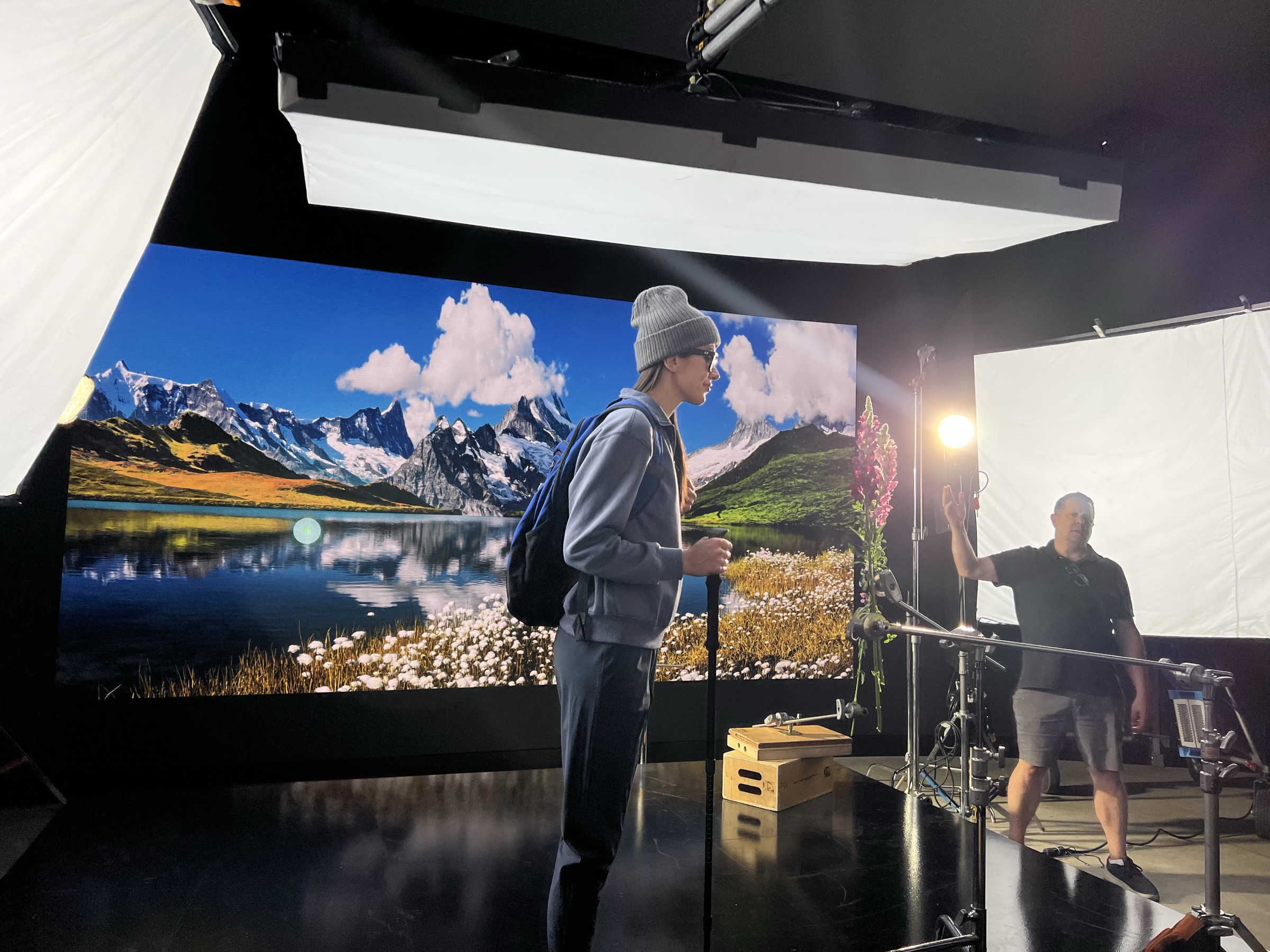
If you’re not familiar with LED volume production (sometimes called virtual production or LED wall production), here’s the short version: instead of shooting talent and products against a green screen and compositing backgrounds in post, you shoot against a massive curved LED wall displaying the actual environments in real time. For this project, we used the LED volume stage at Vossler Studios in Kirkland, WA — and it changed everything about how we approached the shoot.
1. The client sees the final look on set — not later.
With a green screen, there’s always a gap between what you shoot and what the final composite looks like. Even if you perform live keys, there can be spill and aliasing that isn’t a good look. With LED volume, the backgrounds are live and adjustable. When VML and the Qualcomm team walked on set, they could see exactly how each scene would look in real time. That creates excitement, speeds up approvals, and eliminates the “that’s not what I pictured” conversation in post.
2. Lighting matches automatically.
This is the technical win that most people underestimate. An LED wall doesn’t just display a background — it lights the subject. The color temperature, the ambient glow, the reflections on the product — all of it matches the environment naturally. From there, production lighting can be set up to add and accentuate. On green screen, your lighting team is guessing. On an LED volume, they’re reacting to what’s actually there.
3. You move faster.
Changing locations on a green screen shoot means changing your entire lighting setup, adjusting color references, and hoping post can make it all match. On an LED wall, changing locations can be as simple as loading the next background. We shot 25 distinct scenes — real-life environments and colored gradient backgrounds — across two production days. That efficiency is nearly impossible with traditional methods.
Pre-Production: Where Complex Shoots Are Won or Lost
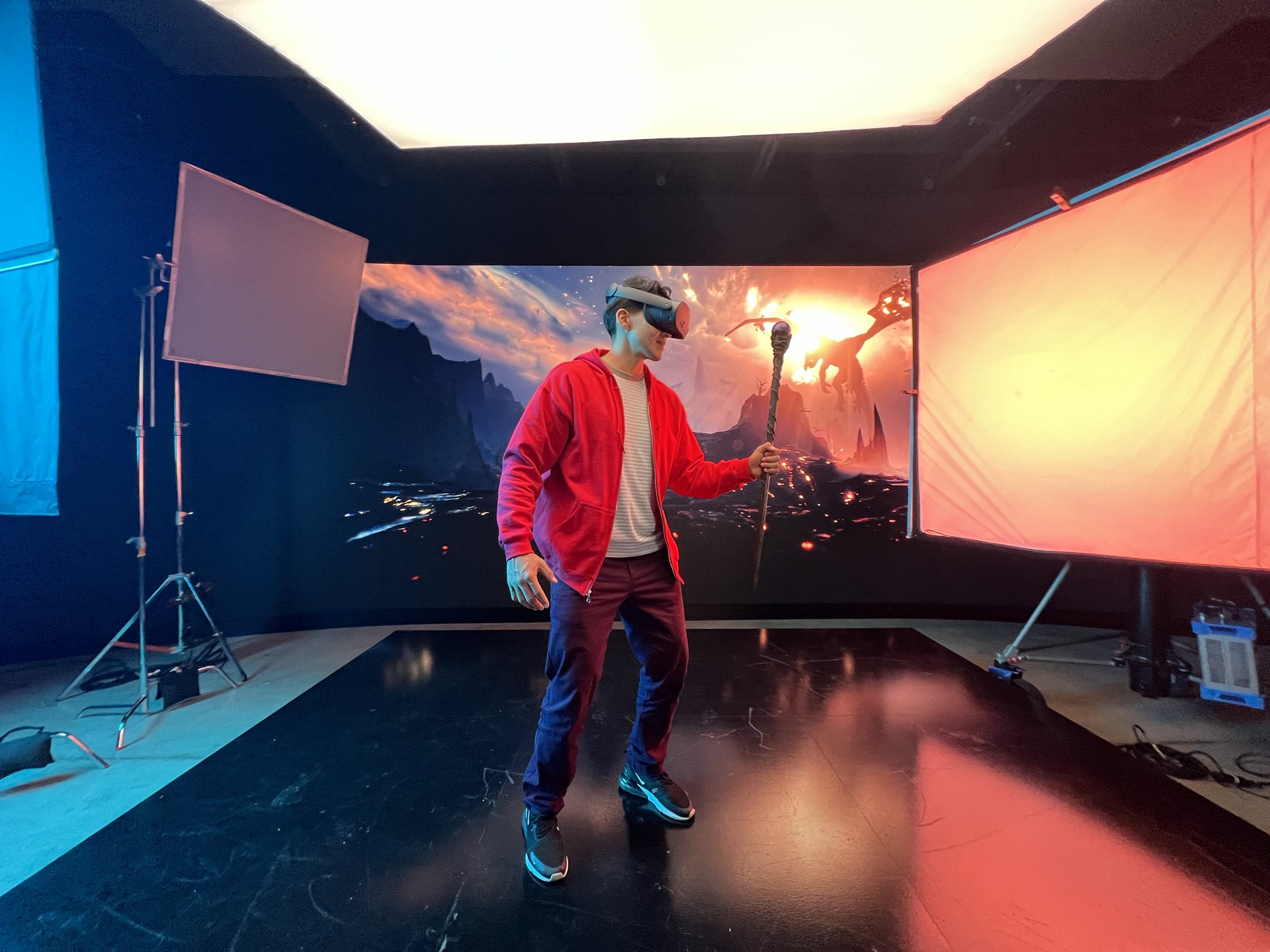
A shoot this dense demands a lot of coordination in pre-production. Our team met with VML multiple times through pre-pro to lock in feasibility and approach for their creative vision and deliverables. That included:
- Venue recommendation and acquisition — We identified and secured the LED volume stage at Vossler Studios as the right environment for this scope
- Crew assembly — 15 crew members across key positions, hand-picked for this type of work
- Scene and shot scheduling — 25 scenes organized by setup efficiency, not just creative order, to maximize our two shoot days
- Talent casting support — 3 on-camera talent, cast to fit the brand and product positioning
- Creative feasibility consulting — Working with VML to ensure every concept was achievable within the LED volume format, including discussing what would and wouldn’t translate from their storyboards to the wall
- Background asset review — VML’s team identified potential backgrounds for the scenes that matched their creative, and we advised on the technical specs and best options based on perspective, lighting, and more
Production: 25 Scenes, Two Days, Zero Overruns
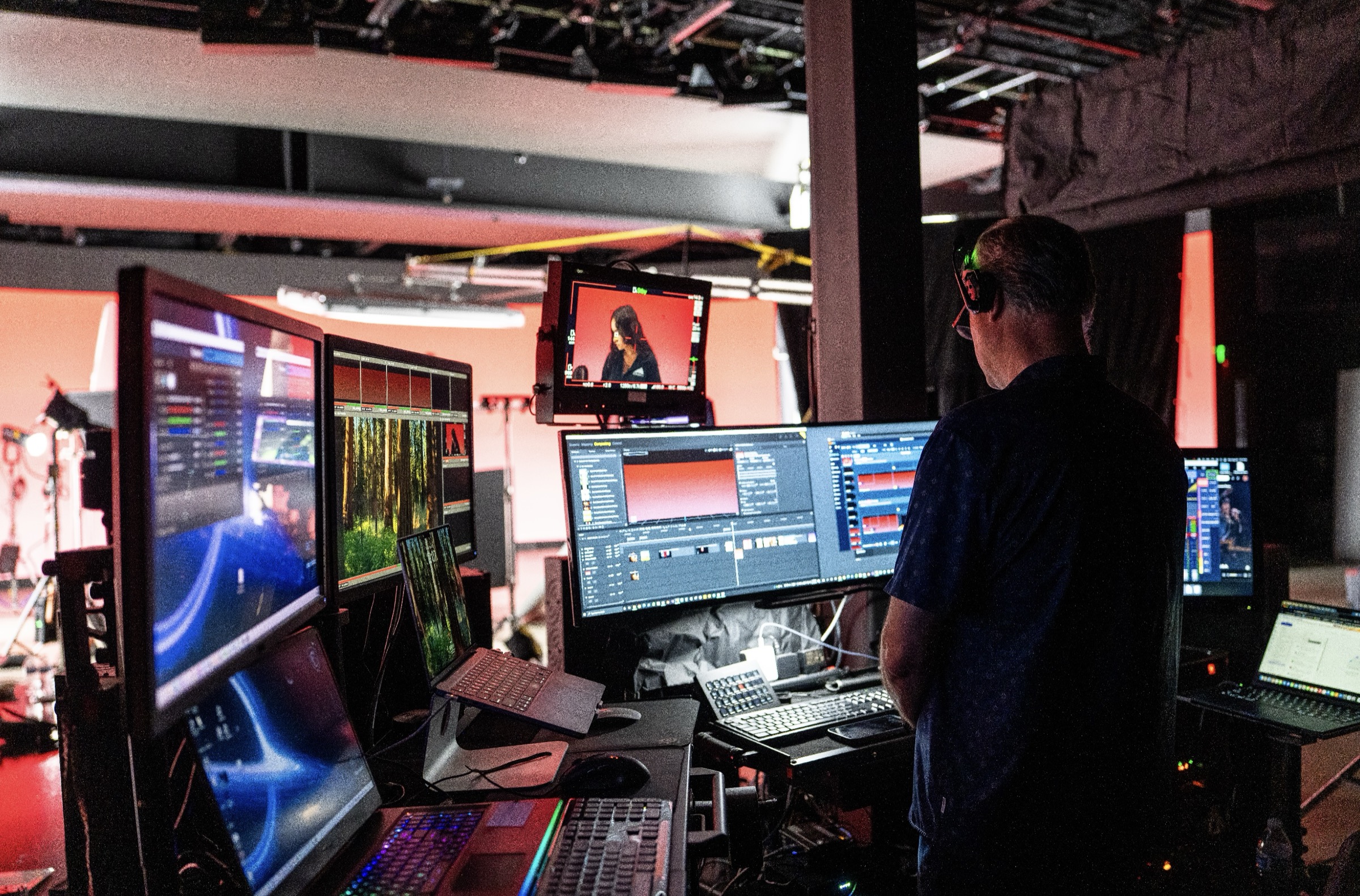
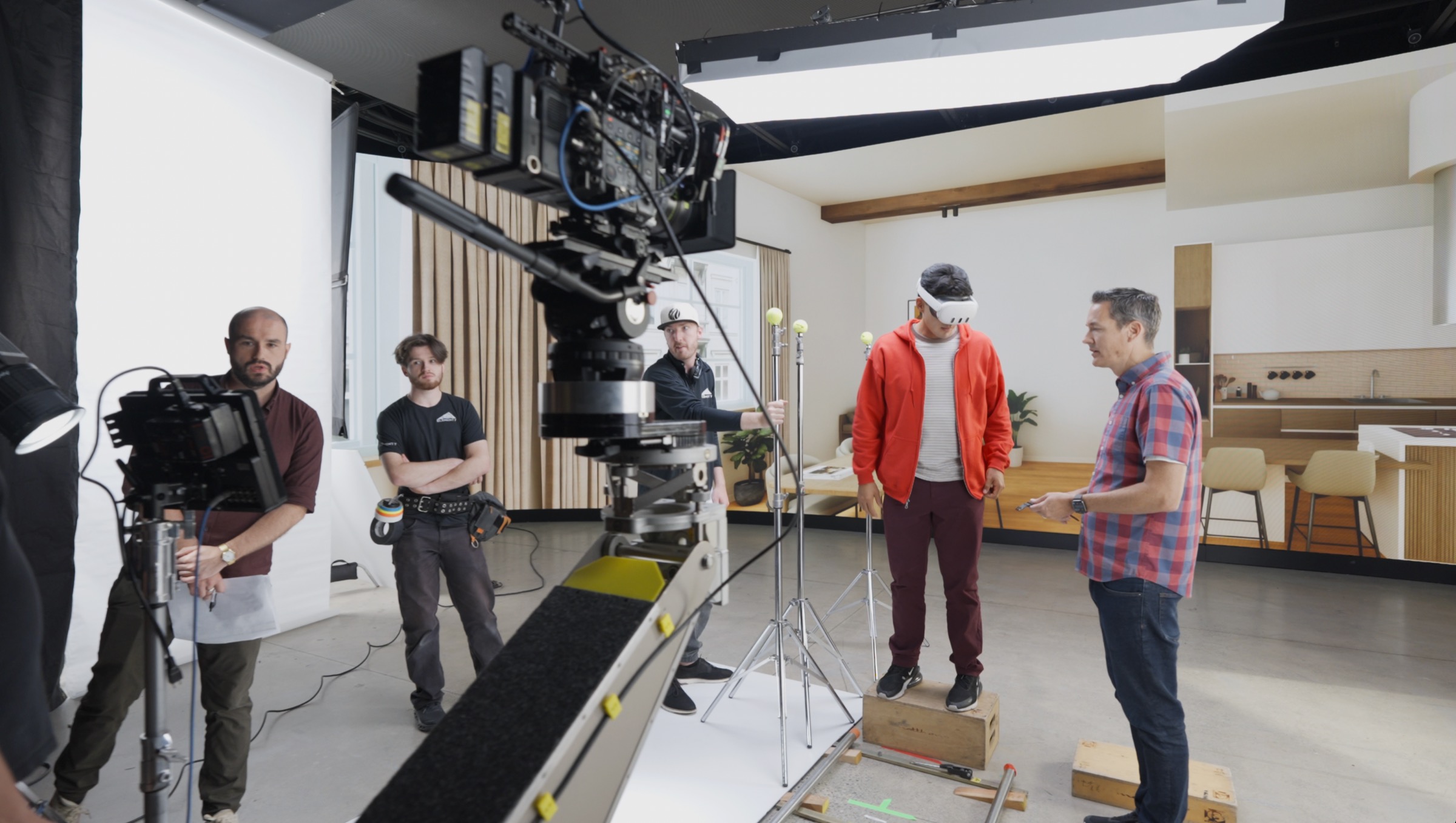
On set, we had roughly 25–30 people at any given time: 15 crew, 3 talent, and 8–10 representatives from the client and agency side. That’s a lot of stakeholders to manage — and a lot of input to coordinate for every take.
Director-led communication flow. Our in-house directors served as the central hub between client, agency, crew, and talent. Instead of notes flowing in six directions, everything filtered through one decision point. That kept the set focused and the shoot moving.
Agency VFX coordination. We worked directly with VML’s VFX supervisors to ensure they got precise measurements of any on-screen movement needed for post-production work. When you’re shooting for composite and digital integration, those details matter — miss a measurement and you’re setting your post team up for hours of needless work.
Real-time schedule management. Despite multiple on-set adjustments, last-minute creative additions, and the inevitable real-time schedule changes that come with a shoot this complex, we wrapped exactly as predicted — and captured additional bonus assets and last-minute requests on top of the original scope.
That last point is worth emphasizing. Wrapping on time on a 25-scene shoot with 30 people on set isn’t luck. It’s the result of pre-production discipline, efficient scheduling, and a crew that knows how to adapt without losing momentum.

The Results
The assets from this shoot now make up the visual foundation of Qualcomm’s XR product pages at qualcomm.com/xr-vr-ar — product sizzles, hero banners, feature videos, and stills across their MR, VR, AR, and AI glasses lines.
When a Fortune 500 technology company trusts your production to be the face of an entire product category on their website, that says something about the quality of the work and the reliability of the process.
What This Means for Your Next Product Shoot
If you’re planning a product launch, campaign shoot, or asset library build, here are the takeaways from this project:
Consider LED volume if you need various environments. The break-even point is usually around 4–6 distinct scenes. Beyond that, LED volume starts saving significant time and money compared to location shoots.
Invest in pre-production proportionally to complexity. The more scenes, talent, and stakeholders involved, the more pre-production matters. We spent substantial time in planning meetings with VML — and that’s exactly why the shoot ran clean.
Choose a production partner who can manage the room, not just the camera. On a set with 30 people, agency VFX supervisors, and a global brand watching, the production company’s job extends far beyond technical execution. It’s communication management, schedule protection, and creative problem-solving under pressure.
Think in asset systems, not single deliverables. This wasn’t one video. It was a complete visual asset system — sizzles, banners, features, stills — all captured in a coordinated two-day window. That systems approach is how enterprise brands get maximum value from a single production investment.
Ready to Plan Your Next Shoot?
Whether you’re an agency looking for a production partner who can handle complex, high-stakes shoots, or a brand ready to build a visual asset library that actually performs — we’d love to talk.